Record-Low Arctic Sea Ice Reaches Peak For Second Consecutive Year In A Row (2026)
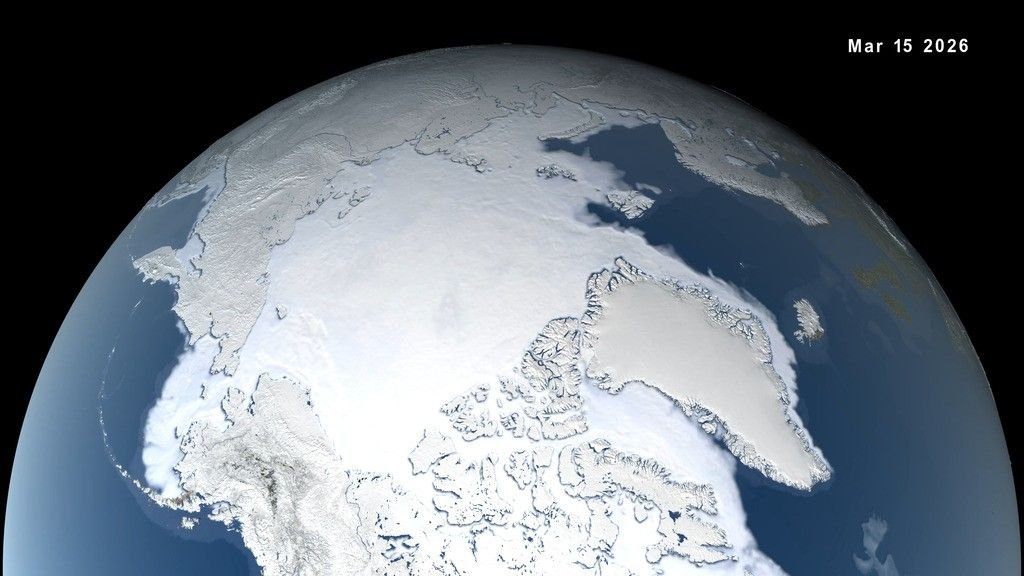
Arctic sea ice has reached its peak extent for the 2025/2026 winter, marking a record-low level that is tied as the joint-smallest on record since satellite observations began in 1978. Scientists from NASA and NSIDC confirmed this alarming trend alongside findings by researchers at Boulder's research center regarding snow ice levels which also hit historic lows for maximum extent during late February to early March of today, marking a second consecutive year where winter sea-ice has declined below previous records as the cold season concludes with minimal coverage.
Key Points
-
1Arctic summer snow and winter sea ice both tied for the lowest recorded extents in their respective records.
-
2The peak extent on March 15, 2026 was measured at exactly 14.29 square kilometers (or approximately five million miles).
-
3This record-breaking low represents a second consecutive year of declining Arctic summer snow and winter sea ice coverage.
Developments
Perspectives
Arctic winter sea ice has hit a record low for the second consecutive year in its satellite history.
— [Mar 27, 12:43] 'Very alarming' winter sees Arctic sea ice hit record-low for second year running (Carbonbrief)The peak extent of Arctics summer and fall snow cover was tied with the lowest on records in Boulder research center finds.
— [Mar 26, 19:30] 'Very alarming' winter sees Arctic sea ice hit record-low for second year running (Carbonbrief)Arctic Winter Sea Ice Ties Record Low NASA NSIDC Scientists Find
— (Science.nasa.gov)Arctic sea ice reached its peak extent on March 15 at a record-low level tied with last year's maximum. Scientists warn that this marks an alarmingly weak winter state characterized by exceptionally low thickness and warmer-than-average conditions across the region.
NASA and NASA's National Snow and Ice Data Center reported that winter Arctic sea ice extent hit a record low for two consecutive years since 1979, reaching only about one-third of its average between 2085-3. Researchers also noted significant thinning in regions like the Barents Sea using ICESat-2 satellite data and emphasized these findings as part of long-term downward trends rather than isolated anomalies.
On March 15 and tied for its lowest maximum extent since satellites began tracking Arctic sea ice over four decades ago at approximately half a million square miles below average. This record low represents about twice the size of Texas and continues a significant downward trend observed in satellite data starting from 1979, alongside observations that much of this thinning involves reduced thickness rather than just area loss.