UK reopens domestic CO₂ plant with £100m investment to counter potential supply shocks
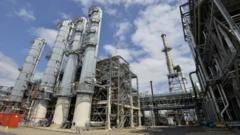
The United Kingdom is reopening a shuttered 2.5 million tonnes per year carbon dioxide facility on Teesside following an emergency government grant of $367,489 (£100million). This decision comes as officials fear that escalating tensions in the Middle East could disrupt global supply chains and lead to shortages for industrial users like breweries and soda producers who rely heavily on imported CO₂.
Key Points
-
1The UK government has approved reopening a shuttered CO2 production facility on Teesside with an investment up to £100 million.
-
2This decision was made in response to fears that ongoing war tensions between Iran and Israel could disrupt global supply chains for carbon dioxide gas used by multiple industries.
-
3Business Secretary Peter Kyle officially signed off the grant, which aims avert potential shortages of biogenic CO2 currently manufactured at Ensus plant.
Developments
Perspectives
A shuttered CO2 production facility on Teesside is set for reopening with a government investment, following concerns that an ongoing conflict in Iran could disrupt supplies of carbon dioxide essential across multiple industries.
— [Mar 26, 09:37] UK CO2 plant to reopen amid fears Iran war could lead to shortage (Theguardian)Britain has approved a £100 million grant for three months at the Ensus Teesside facility. The gas is produced as an industrial byproduct of bioethanol, which was previously manufactured there.
— [Mar 26, 08:16] UK reopens domestic CO2 plant as Iran war threatens supply (Arynews)The Department for Business has been expected to announce the decision on Thursday. This move is part of a contingency plan designed specifically against potential disruptions caused by an Iranian-linked conflict.
— [Mar 26, 01:51] CO2 plant to reopen in Iran war contingency plan (Feeds.bbci.co.uk)The facility had been mothballed the previous year after a trade agreement with the United States reduced tariffs on bioethanol. The government grant is intended as an emergency measure.
— [Mar 25, 22:07] Government grant to reopen CO2 plant amid fears of Iran-linked shortages (Independent.co.uk)Business Secretary Peter Kyle has officially signed off the £100 million funding package. He emphasized that this action is necessary due to specific risks regarding supply chains linked with war in Iran.
— [Mar 25, 21:55] Peter Kyle clears reopening of CO2 plant amid fears of Iran-linked shortages (Standard.co.uk)The British government has approved reopening a mothballed CO2 facility on Teesside with £100m in funding to address potential gas shortages caused by fears over Iran's war. This decision reverses earlier closures linked to trade deals, aiming to bolster supply chains for critical sectors including food production and healthcare while supporting the UK manufacturing economy during global uncertainty.
The UK government plans a £100m investment to restart an Ensus CO2 production facility on Teesside as part of contingency measures against potential supply disruptions from the war in Iran. This decision follows previous closures caused by trade deals with the US and rising energy costs, which have exacerbated concerns about fuel prices following recent military actions that may block key shipping routes like the Strait of Hormuz.
The UK Government has approved a £100 million grant to reopen Ensus' mothballed CO2 plant in Teesside for three months due to fears of supply disruptions from the war with Iran. While officials insist petrol supplies remain reliable, industry leaders warn that shortages could affect oil and gas within weeks as global trade routes face potential blockades at the Strait of Hormuz.
The UK Government has approved a grant of up to £100 million for the Ensus plant on Teesside, which will be reopened temporarily due to fears that energy shortages from global conflicts are disrupting CO2 supply. While ministers insist petrol supplies remain reliable and deny plans for rationing or blackouts, industry leaders warn there is still significant risk of oil and gas shortfalls in coming weeks as Iran maintains a blockade over the Strait of Hormuz.