Nvidia Unveils AI-Powered Breakthrough for Game Graphics at GTC Event
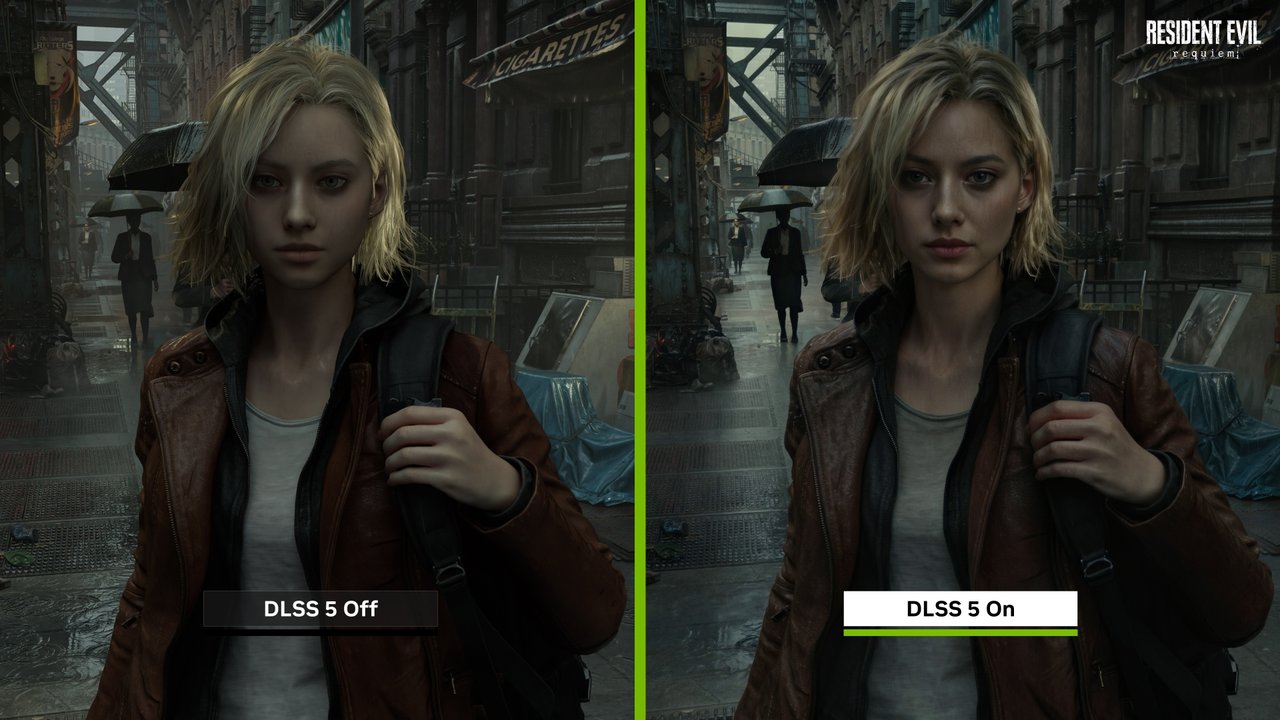
NVIDIA has officially unveiled its latest Deep Learning Super Sampling technology, version five or "DLSS," during the company's March 16 keynote address. This new iteration marks a significant shift from previous frame-rate boosting methods to introduce real-time neural rendering that infuses pixels with photorealistic lighting and materials directly into game frames.
Key Points
-
1NVIDIA has officially announced its latest technology update called 'DLSS 5' at GTC 2026.
-
2The new system utilizes advanced AI and generative models to achieve photorealistic lighting, textures, and materials in real-time gaming environments.
-
3This represents the most significant advancement NVIDIA's Deep Learning Super Sampling has seen since its introduction over a decade ago.
Developments
NVIDIA announced DLSS 5 for its upcoming RTX 50-series GPUs using neural rendering techniques designed by the company as photorealistic lighting enhancements but which many gamers criticize. While NVIDIA maintains developer choice over implementation, critics argue that despite technical claims of realism and smoothness without altering visuals, the technology heavily distorts graphics with an AI-filtered appearance similar to previous controversial multi-frame generation features.
At its annual GTC conference in April of this year (the text incorrectly states 2026), NVIDIA CEO Jensen Huang unveiled DLSS 5 as a real-time generative AI technology that fuses traditional rendering with predictive models. This system uses structured game data to create photorealistic visual details like skin pores and light scattering while simultaneously reducing the computational load on GPUs compared to previous iterations of Deep Learning Super Sampling (DLSS).