First US meatpacking stoppage since '80s as thousands
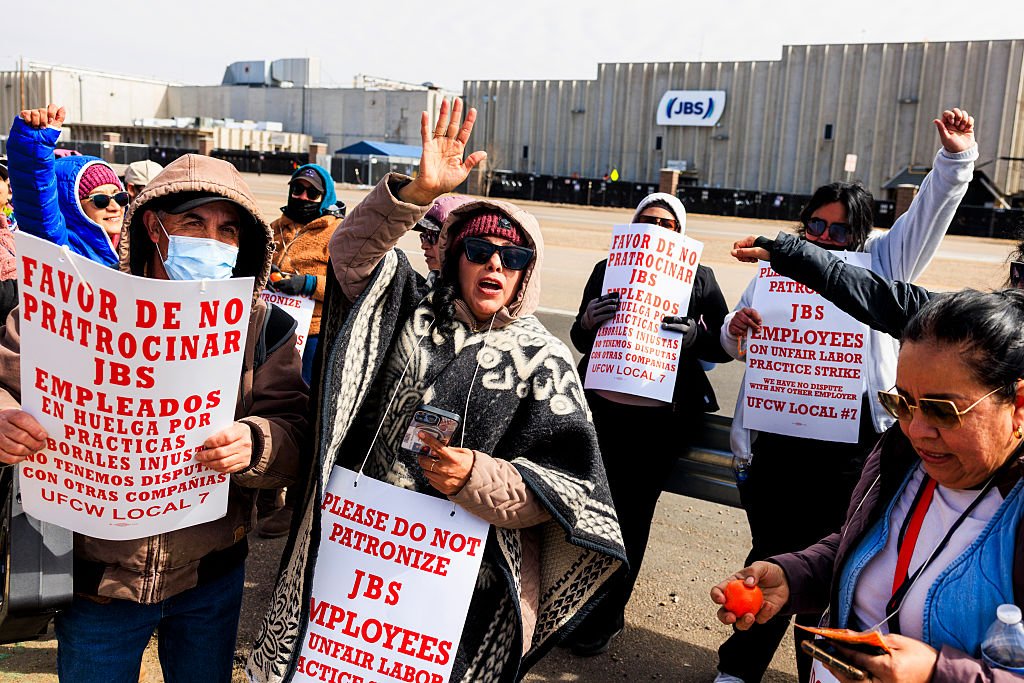
Approximately 3,800 union members at the Swift Beef Co. facility in Greeley went on strike Monday morning to demand higher pay and improved working conditions for their families who have been injured by accidents since '92 when a worker was killed while cutting meat with an axe that had not yet sharpened properly enough before being used again during production hours later into early afternoon today itself already causing shutdowns across multiple states including Colorado where local authorities are now coordinating emergency response teams to ensure public safety remains intact throughout...
Key Points
-
1The nearly 4,000 workers striking are pushing for better wages and working conditions.
-
2The union alleges that JBS committed unfair labor practices including unlawful 'union busting'.
-
3JBS claims its contract offer includes wage increases but maintains it is not the sole issue of contention.
Developments
Nearly 3,800 workers at JBS in Greeley are striking since March 16 over stalled negotiations regarding wages and working conditions amid rising living costs. While Union Local 7 cites unfair labor practices as a primary driver for the walkout that could impact local supply chains, company representatives dispute these claims by asserting their offer is fair industry-standard-aligned despite ongoing disputes about negotiation tactics.
Nearly 4,000 workers at Colorado's largest meatpacking facility began an unauthorized strike over wage stagnation below inflation levels. The union alleges the company has engaged in unlawful practices by refusing good-faith bargaining and creating dangerous working conditions through increased processing speeds while cutting hours or failing to provide safety equipment.
Approximately 3,800 workers at Greeley's largest meatpacking facility went on strike demanding better pay, safety measures, and fair labor practices. A local cattle rancher noted that the market remains steady because low supply levels from drought have already minimized potential disruptions to feedlots' contracts with JBS plants by October or December.