Civil-military unity drives unified policy to tackle security threats in volatile region
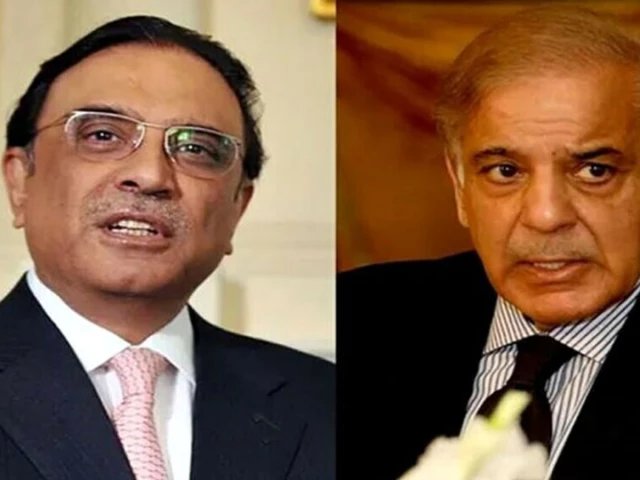
President Asif Ali Zardari chaired a critical four-hour session on Thursday where top civilian and military leaders endorsed an integrated strategy addressing Pakistan's energy crisis, economic instability, and regional volatility through national consensus. The leadership emphasized strengthening institutional coordination to navigate security challenges while ensuring stability across the country amid ongoing tensions in neighboring regions.
Key Points
-
1President Asif Ali Zardari chaired a high-level civil-military consultation on March 26-27 focused on Pakistan's economic stability amidst global oil price increases.
-
2Leadership emphasized the need for national consensus and institutional coordination to address security threats stemming from regional tensions involving Iran, Israel, and the US.
Developments
Perspectives
President Asif Ali Zardari chaired a high-level meetin at Aiwan-e-Sadr on Thursday to review Pakistan's economic situation amid global oil price rises, supply constraints, and regional tensions.
— (Thefinancialdaily)Civil-military leadership endorsed a unified policy approach through consensus and institutional coordination to protect security, economy, food supplies against challenges triggered by the US-Israel war on Iran.
— (Feeds.feedburner.com)President Asif Ali Zardari stressed national consistency in view of emerging regional chalenges arising from an ongoing conflict between Israel and Irn
— (Dawn)President Asif Ali Zardari chaired a high-level meeting to review the impact of rising global oil prices on inflationary pressures and energy security. Officials emphasized fiscal discipline through austerity measures while acknowledging that structural reforms, such as diversifying into renewable sources, are necessary for long-term stability amidst regional tensions.
On March 26, President Asif Ali Zardari chaired a high-level consultative session where civil-military leaders endorsed unified policies to protect Pakistan's security and economy amid rising oil prices linked to the US-Israel war on Iran. The meeting focused on stabilizing petroleum costs through fiscal discipline while addressing regional challenges that threaten food supply chains across multiple sectors of society in 2026
President Asif Ali Zardari chaired a high-level security and economic review in Islamabad on Thursday with Prime Minister Shehbaz Sharif and Field Marshal Asim Munir. The meeting emphasized strengthening national consensus to address regional instability from US-Israel tensions, while reviewing oil price hikes' impact through austerity measures aimed at stabilizing the economy and reducing inflationary pressures.
President Asif Ali Zardari chaired a high-level security-economic summit in Islamabad attended by Prime Minister Shehbaz Sharif and Chief Field Marshal Munir. The meeting emphasized national consensus on managing regional instability from US-Israel tensions, while reviewing oil price hikes to stabilize the economy through fiscal discipline and public awareness campaigns for fuel conservation.
Pakistan's top civilian and military leaders convened a high-level consultative session chaired by President Asif Ali Zardari at Aiwan-e-Sadr to address rising energy costs, global oil supply constraints, regional security developments. Officials emphasized the necessity of maintaining national consensus and strengthening institutional coordination while implementing austerity measures to stabilize petroleum prices and ensure economic stability amidst inflationary pressures.